Finding Mortgage Information on a Property
By PropertyScout.io Team · Published 2020-08-17
It’s Tough Being a “Mortgage Sleuth”
How do you get an idea of where to price a listing at or, better yet, gain from a sale? Gaining a snapshot of what’s owed on a mortgage against the equity will help you arrive at a number! But what do you do if there are “influences” working in the background that completely stir things up? Whether you are a realtor or investor, trying to uncover mortgage information on a property is a bit tricky. It would be great if things were as simple as asking a property owner what the balance is on their mortgage. Sometimes the opportunity doesn’t present itself for that conversation to happen. Instead, we have to rely on our own diligence to gain the insight we need when it comes to mortgage information. To effectively negotiate on property prices, it helps to have mortgage information. So, how do we find out mortgage details if we can’t ask the property owner directly? It takes a LOT of time to access public records on mortgages. You’ll make phone calls, send emails, do lengthy searches online, and perhaps visit your local county clerk’s office. Guess what? We’re going to tell you how to get the information you need and how you can save precious time that could otherwise be devoted to growing your business!
The Importance of Finding Mortgage Information on a Property

Whether you are in the real estate industry or an investor, gaining insight into a property’s mortgage is essential. Debt burdens such as liens and liabilities on a
property co
me with risks. Realtors can leverage mortgage information to be more efficient in helping your clients. Investors, on the other hand, gain valuable intelligence on a property to be able to manage risks in their portfolio. Transparency of mortgage info from one end to the other prevents you from any unexpected surprises.
The Impact of COVID-19 and Mortgages
COVID-19 is responsible for spikes in unemployment. As a result, homeowners are paddling in drowning waters, trying to keep up with mortgage payments. Delinquency in payments doubled in comparison to pre-COVID. Property owners are reaching out for solutions to alleviate their situations through various loans and even putting their property up for sale to avoid foreclosure.
Past-due mortgages are the highest they’ve ever been. Delinquency statistics reflect just how serious COVID-19 is for property owners.
30-59 days delinquent
- 2019: 1.7%
- 2020: 4.2%
60-89 days delinquent
- 2019: 0.6%
- 2020: 0.7%
Home prices reportedly are forecasted to drop in 2021. As a result, a homeowner’s equity no longer provides a cushion. The uncertainty of our economy and COVID-19 raises concerns across the nation for homeowners trying to avoid foreclosure. As a realtor or investor, knowing a property’s chain of mortgage events becomes crucial more than ever because of the impact of COVID-19.
Where to Begin
When it comes to “sleuthing,” you have to have a trail to follow. A paper trail is going to lead you to the information you want. Those paper trails begin at your local county clerk’s office. First, you have to have the owner’s name and the address of the property. To get the owner’s name, you may have to do some initial online searching. If that doesn’t yield results, you may have to call or go down to your county clerk’s office to find mortgage information on a property. And so the fun begins!
Public Records of Mortgage Recordings

Mortgage records are publicly accessible, but to get the information will require a significant investment of your time. Most every county in the U.S. has an office and/or website where you can request those records. Smaller rural counties may not have a website, which, of course, would require you having to go in person. Larger counties that do have websites typically have a place on the site where you can request a mail-order of the records. There may be a fee to process your request to cover postage.
You can also access tax and assessment records on a property through a country registrar’s office. The information gained from these records won’t give you a definitive amount with regard to a mortgage on that property, but it will provide you with a range of what a seller’s mortgage balance is.
Why You Can’t Find Mortgage Info on a Property
If you go down to your local county office to get public records on a mortgage recording, be forewarned you may not get anything. If it wasn’t filed, there’s not going to be anything on record.
Unrecorded Mortgages
When it comes to mortgage recordings, it’s all about racing down to the county clerk’s office and filing it—failing to do within the state’s required timeframe results in putting a lender and the homeowner at risk. Not all mortgages are recorded. What does this mean for you?
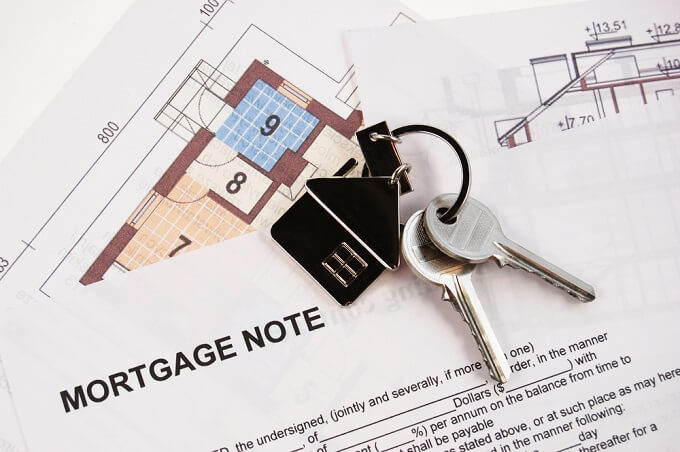
Well, unfortunately, you aren’t going to get the information you need. The county office won’t have it, because it was never given to them to file. Mortgage documents create a traceable path on the ownership of a property. It’s this information you want.
Most states within the U.S. have a set of statutes for recording documents for properties. These statutes impose legal notices of intended ownership of a property. Mortgage security instruments (documents) are recorded in the appropriate jurisdiction to provide the public with constructive notice of a property interest. The practice of recording and providing constructive notice is designed to protect mortgage lenders against any claims on the property.
Jurisdiction Prioritization
Properties mortgaged multiple times, as well as properties with liens, are recorded based on a priority ranking system. Jurisdictions prioritize recordings by three rankings:
- Race (who gets the recording done first – time)
- Notice (see below scenario)
- Race-Notice
Mortgages with previous recordings put all prior mortgage lenders on constructive notice. A property with an unrecorded mortgage abolishes prior interests in the property.
An Example Scenario of What Can Happen When a Lien Trumps Over a Delayed Mortgage Recording
The Jones’ got a loan from their bank to buy a home on August 15th. The mortgage wasn’t recorded until August 30. A hailstorm caused significant damage to the windows of the Jones’ house. A friend who happens to own a window replacement business offered to finance the $12,000 to replace the windows. Friend or no friend, to finance the windows, their friend asked for a form of collateral in case of default, and in this case, they put their home down as collateral. The friend filed the documents on August 28th, showing the agreement between all parties. This filing was done at the local county clerk’s office. Once “filed,” it becomes known as “recorded.”

Who do you think has priority? The friend does because the lender failed to record the mortgage asap. This is what’s known as “race” priority. The one who records first gets priority when the jurisdiction happens to be a “notice” district.
So, what you have here is a lien that pops up in first place on a mortgage, In second place is the lender who failed to record the mortgage fast enough. The above scenario is one example of many that affect a mortgage.
Most states require lending agencies to record mortgages within a precise time frame. Failing to do so puts the lender at risk as well as the owner of the property. Lending agencies who give someone a home equity line of credit (HELOC) and fails to record it, can put a homeowner in a real pickle when that homeowner goes and tries to refinance and can’t because they can’t get the insubordination completed. It turns into a serious nightmare!
“Influencers” of Mortgages
Mortgages are like dominoes that all line up, one behind another. However, the one in front may be the only one you see. Mortgages that go unrecorded are those that go unseen. If you are searching for information on a mortgage that has a reverse mortgage, home equity loan, or a home equity line of credit makes it challenging to get an accurate picture of a mortgage itself.
For you, these “influencers” are a few things that can affect the accuracy of any mortgage information you do get.
Reverse Mortgages
Those over 62 years old borrow against their home equity, which is paid back when the owner dies or the home is sold. The homeowner is compensated by:
- A lump sum
- Monthly payment
- A line of credit
- Combination of all of the above
Home Equity Loan
- Referred to as a “second mortgage.”
- A lump sum paid back over a specified period of time through monthly payments.
- The borrowed amount is dependent upon the amount of equity you have.
Home Equity Line of Credit
- Homeowners obtain a loan with collateral of home equity.
- The amount loaned is based on how much home equity the homeowner has.
Easements
- Easements on a property can impact mortgage information. Pre-existing mortgages that don’t reflect an easement come with risks. When the current property owner defaults in their mortgage payment, the lender has the option to foreclose, thus extinguishing the easement. To avoid this, a property owner has the option of refinancing with a new mortgage that includes the easement. By doing this, the interest of the easement holder is prioritized ahead of the lender.
Economic Stability
- The “ups and downs” of our economy influence the lending industry. Unemployment trends significantly impact property owners’ abilities to meet the terms of their mortgages. When this occurs, you begin to notice a layering of mortgages or liens on a property that results from a property owner’s attempts to keep their head above water.
- Loss mitigation is a reality when a property owner is facing foreclosure. Most lenders try to help keep the owner in their home. When this occurs, a property owner may opt for one of several solutions.
- Refinancing
- Loan modification
- Agreed upon plan of repayment
- Short-sell
- Deed-in-lieu of foreclosure
Bypass All of the Above!
Now we come to our promise that you can find out how much is owed on a mortgage.
- No searching through your local county clerk’s office.
- No digging up info through online searches.
- No trying to figure out who has liens on what.
- Your precious time is saved to do more important things.
- No unexpected surprises that can seriously cost you money down the road.
- You get accurate information.
The number of complexities that stand in the way of getting the information you need is removed! You can simply search on a property, and it pops up with everything you want to know. PropertyScout.io is one of the leading tools lenders, investors, and property/casualty insurers are taking advantage of to secure their interest. Give us a try with a 3-DAY PASS!